

Hellspin casino Plinko game
Introduction
Plinko at Hellspin casino is one of those rare casino games that looks almost too simple at first glance. You set a stake, choose a risk level, drop a ball, and watch it bounce through a field of pegs until it lands in a payout slot. That is the whole visual concept. But the simplicity is slightly deceptive. In practice, Hellspin casino Plinko can feel calm, brutal, fast, and oddly hypnotic within the same session.
I have seen many players approach Plinko as if it were a lighter version of a slot. That is usually the first mistake. This format follows a different rhythm, creates a different kind of tension, and asks for a different mindset. There are no reels, no bonus rounds, no expanding symbols to keep track of. Instead, the entire experience is built around probability distribution, stake control, and the psychological effect of repeated drops with highly uneven outcomes.
For Australian players looking at Hellspin casino Plinko, the key question is not whether the interface looks entertaining. The more useful question is what the game actually offers over a real session. Does it suit short bursts of action or longer play? Is it mostly about chasing large multipliers? Does the low-entry simplicity hide a high-variance profile? These are the points that matter before launching the game.
In this review, I will focus strictly on Plinko itself: how it works, why it attracts so much attention, where the real appeal comes from, and where caution is needed. The goal is practical clarity. If you want to understand whether Plinko is worth trying and what to realistically expect from it, this is where the answer starts.
What Plinko is and why it draws so much attention
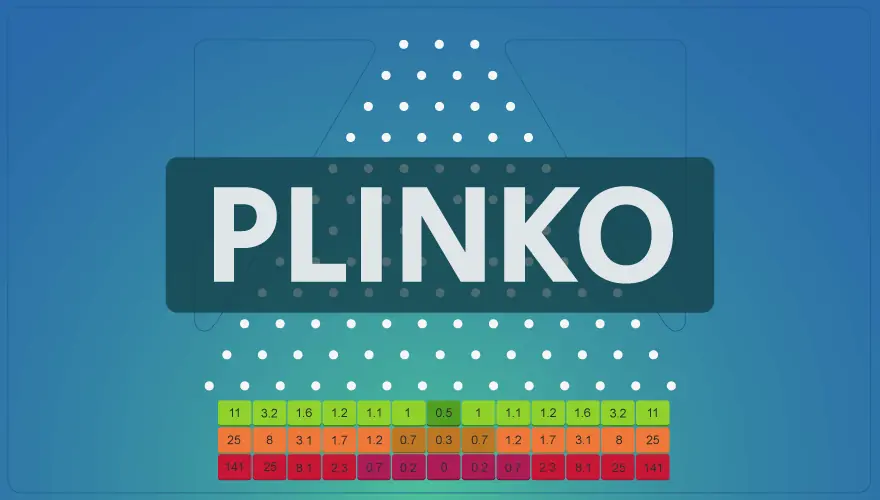
Plinko is a probability-based casino game built around a falling ball and a board filled with pins. The ball drops from the top, hits multiple pegs on the way down, and eventually lands in one of several slots at the bottom. Each slot has its own multiplier. Lower multipliers tend to sit in the centre where outcomes are more common, while the highest multipliers are usually placed near the edges where landing is much less frequent.
The reason this format stands out is obvious once you play a few rounds. Unlike a slot, where the result is presented instantly through a reel stop, Plinko shows the path. The player sees randomness unfold in front of them. That visual journey matters more than it may seem. Even though the result is determined by the game’s underlying logic and randomisation, the bouncing movement creates a sense of suspense that feels more physical than digital.
That is one of the most distinctive things about Hellspin casino Plinko. The interface is stripped back, but the emotional response is not. A small movement left or right can turn a modest return into a complete miss, or a routine drop into a rare high multiplier. This makes the game highly watchable. It also explains why Plinko has become so visible on streaming platforms and on casino game pages. Not because it is merely trendy, but because it compresses anticipation into a very short cycle.
Another reason for its visibility is accessibility. A new player does not need to learn paylines, symbol values, side bets, or table strategy. The entry barrier is low. But what keeps players interested is not just ease of use. It is the contrast between a clean interface and a result profile that can change sharply depending on chosen settings.
That contrast is worth remembering: Plinko looks casual, but it does not necessarily play casually.
How the Plinko system works in practice
At a functional level, the structure is straightforward. You choose your bet size, select a risk level, and in some versions adjust the number of rows. Then you drop the ball. The ball hits peg after peg, shifting left or right until it reaches the bottom row and lands on a multiplier.
What matters in practice is that these settings change the shape of the payout map. A lower-risk setup usually compresses the multiplier spread. You are more likely to see smaller, more frequent returns, and the extreme top-end outcomes become less dramatic. A higher-risk setup does the opposite. It creates a wider gap between ordinary results and rare premium multipliers. The centre may become less forgiving, and the edges more valuable but harder to hit.
The movement itself creates a useful illusion of control, and this is where players need to stay grounded. Watching the ball bounce from peg to peg can make each micro-movement feel meaningful, as if the route is developing in a readable way. In reality, the important point is not to “read” the path but to understand the distribution behind it. Plinko is not a skill game. The path is the visual expression of random outcomes, not a puzzle to solve. Mobile players should have a look at Hellspin Casino coupons review before depositing real money before installing anything.
Still, the board design does affect how the session feels. More rows generally mean a longer path and often a broader spread of possible landing zones. Fewer rows tend to shorten the drop and simplify the pattern of results. This does not remove uncertainty, but it changes how sharply the probabilities are distributed.
| Core element | What it does | Why it matters to the player |
|---|---|---|
| Bet size | Defines the value of each drop | Sets the speed at which your balance rises or falls |
| Risk level | Changes the multiplier distribution | Directly affects session volatility and expected rhythm |
| Rows | Adjusts the depth of the board | Influences drop duration and spread of outcomes |
| Multiplier slots | Determine the return for each landing position | Show where common and rare results are concentrated |
One of the most useful ways to think about Plinko is this: the board is not there to hide complexity, but to display it. The pegs make the game readable. They show you that small directional changes compound, and that the biggest numbers usually sit where the ball is least likely to finish.
Why the game feels engaging and how its tempo affects the session
The tempo of Plinko is one of its strongest hooks. Each round is short, but not instantaneous. That gap matters. It is long enough to build anticipation and short enough to encourage repetition. In practical terms, this creates a rhythm that can become much faster than many players expect.
In a slot, there is often a natural pause while players watch symbols settle or wait for a feature to trigger. In Plinko, the cycle is tighter. Drop, bounce, result, repeat. Because the interface is so clean, there are fewer distractions between rounds. That can make bankroll movement feel deceptively smooth, especially when the stake is modest and the player starts increasing the number of drops.
This is one of the first observations I would highlight for anyone trying Hellspin casino Plinko for the first time: the game can feel slower than it actually is. The animation gives the impression of a measured pace, but the decision loop is extremely compact. You are never far from the next round, and that makes discipline more important than the simple layout suggests.
The second important point is emotional pacing. Plinko does not build suspense through narrative features or layered bonus systems. It builds suspense through near-misses and distribution tension. A ball drifting toward a high multiplier before bouncing away in the final moments produces a very specific reaction. It is not the same feeling as missing a bonus on a slot reel. It is more immediate, and for some players more frustrating.
The third observation is that Plinko often changes character when the risk setting changes. On low risk, the session can feel almost procedural, with many modest results and fewer dramatic swings. On high risk, the same board becomes much sharper. Long stretches of low-value landings can be interrupted by rare spikes. This means the exact same game may feel stable to one player and punishing to another, simply because they entered with different settings and expectations.
Risk profile, variance, and who should treat Plinko carefully
Plinko can range from relatively measured to highly aggressive depending on configuration, but even at its calmer settings, it remains a chance-driven format with uneven result patterns. That is why I would not describe it as a “safe” option just because the controls are simple.
For players who are used to classic slot machines, the risk profile may be surprisingly transparent. In slots, volatility is often felt over time through dry spells and occasional feature hits. In Plinko, the distribution is visually exposed. You can see that the biggest multipliers sit in narrow target zones. You can also feel how often the ball is pulled toward more central, lower-value outcomes. The structure itself teaches you where the game wants most rounds to end.
This does not make the experience less exciting. It makes it easier to understand. And that is valuable. When players lose control in Plinko, it is often not because the game is unclear, but because the simplicity encourages overconfidence. There is a temptation to think that one more drop can quickly correct a weak run. On higher risk settings, that logic becomes expensive very quickly.
If I had to summarise the danger in one sentence, it would be this: Plinko makes randomness feel close enough to touch. That can be thrilling, but it can also make chasing behaviour feel more rational than it really is.
Low risk settings usually suit players who want longer sessions, smaller fluctuations, and fewer extreme outcomes. The returns are often more frequent, but the ceiling is lower.
Medium risk settings sit in the middle ground and tend to offer the most balanced introduction for new players. You still get variation, but the swings are not always as abrupt.
High risk settings are for players who understand that many ordinary drops may lead nowhere significant while a rare edge landing can transform the session. This is where bankroll pressure rises fastest.
For Australian users exploring Hell spin casino Plinko, this is probably the single most practical takeaway: do not judge the game by its visuals. Judge it by the multiplier map and by how quickly repeated rounds can add up.
What players should understand about probabilities and possible outcomes
Plinko is often discussed in terms of luck, but that is only half the story. The more useful lens is probability distribution. The ball is more likely to land in some areas than others, and the payout structure is built around that fact. Central slots usually pay less because they are reached more often. Edge slots pay more because they are reached less often.
That sounds obvious, but it has a practical consequence many players overlook: the headline multiplier is not the game. It is the tail end of the distribution. What defines your real session is the frequency of ordinary results between those rare peaks.
In other words, seeing a maximum multiplier on the board tells you very little on its own. What matters is how often low, medium, and high slots are realistically hit under the selected configuration. A board advertising a huge top-end number may still produce a session that mostly revolves around modest or losing drops.
I would also stress that short sessions can create misleading impressions. A player may hit a rare multiplier early and conclude that the game is more generous than it is. Another may miss all premium zones in a brief run and decide it is impossible to win. Neither conclusion is reliable. Plinko is especially good at producing distorted first impressions because each result is so visually memorable.
| Session factor | Common player assumption | More accurate reading |
|---|---|---|
| Large visible multiplier | The game has strong earning potential every session | The top payout may be rare enough to barely affect most short runs |
| Frequent central landings | The game is being “cold” | This is often the expected shape of the distribution |
| Near-miss edge bounces | A big hit is due soon | Previous paths do not increase the chance of the next premium landing |
| Quick early success | The current setup is especially favourable | Short-term variance can create flattering but temporary patterns |
If you understand this, Plinko becomes easier to evaluate honestly. It is not about predicting where the next ball will go. It is about deciding whether the relationship between pace, variance, and payout spread fits your style of play.
How Plinko differs from slots and other casino game formats
The easiest comparison is with online slots, because that is where many players come from. But the differences are substantial. A slot is usually content-rich: symbols, themes, free spins, bonus rounds, reel modifiers, and layered trigger systems. Plinko strips almost all of that away. It does not ask you to wait for a feature. The entire event is the drop itself.
That changes the psychology of play. In slots, players often chase a bonus round because it feels like the main event. In Plinko, there is no secondary stage waiting behind the base round. Every drop carries the full weight of the experience. That makes the game more direct, but also more repetitive if you need variety to stay engaged.
Compared with roulette review such as roulette, Plinko is also different in how it presents randomness. Roulette gives you a result instantly after the spin. Plinko visualises the journey. The destination may still be random, but the route creates a stronger sense of involvement. For some players, that makes it more entertaining than a simple number result. For others, it can feel like a cosmetic layer over the same fundamental uncertainty.
Crash-style games offer another useful comparison. Like Plinko, they are often simple, fast, and centred on risk management. But Hellspin Casino crash games involve a decision point about when to cash out. Plinko does not. Once the ball drops, the player is a spectator. That makes it less strategic than crash formats, but also easier to access for players who do not want timing-based pressure.
So where does Hellspin casino Plinko sit in the wider casino mix? I would place it between slots and instant-win formats. It has the visual suspense of a casino product, but the stripped-down logic of a probability toy with real-money consequences. That unusual balance is exactly why some players love it and others move on quickly.
Practical strengths and limitations of the Plinko format
Plinko has very clear strengths, and they are not hard to identify once you stop looking at the game as a novelty. First, it is readable. The board shows where the likely outcomes are clustered and where the premium returns sit. That level of transparency is refreshing in a sector where many products bury their logic under layers of presentation.
Second, the game is flexible. Different risk levels and board settings can materially change the feel of the session. That gives players some control over experience design, even though it does not create control over outcomes. This distinction is important. You cannot steer the ball, but you can choose the type of volatility you are willing to sit through.
Third, the format is efficient. If you want a short session without learning a complex ruleset, Plinko delivers that immediately. There is almost no setup friction. For players who prefer direct interaction over feature-heavy design, that can be a real advantage.
But the limitations are just as real. The biggest one is repetition. Because the core action never changes, the game can start feeling one-note if you are someone who enjoys progression, unlocks, or layered bonus structures. A few strong results can mask that early on, but over time the simplicity that attracts players can also flatten the experience.
Another limitation is the potential for misreading value. The board can make high multipliers look more attainable than they are, simply because they are visible at all times. This is not a flaw in the software. It is a cognitive effect. Seeing the target every round keeps the chase mentally active, even when the actual odds remain steep.
Finally, the pace can work against bankroll management. Because rounds resolve quickly and the controls are minimal, it is easy to move from casual testing into a rapid sequence of drops without noticing how much has been committed.
Strong side: easy to understand from the first minute.
Strong side: clear difference between low, medium, and high-risk play styles.
Strong side: strong visual suspense without needing complex bonus design.
Weak side: can become repetitive for players who want variety.
Weak side: visible top multipliers may encourage unrealistic expectations. If bonuses are what you care about, Hellspin Casino Aviator crash game and casino rules breaks down every offer currently running.
Weak side: fast repetition can accelerate losses if stake discipline slips.
What to check before launching Hellspin casino Plinko
Before starting a session, I recommend looking at Plinko less like a casual click-and-play diversion and more like a format that needs a quick setup decision. The settings matter. They influence not only the payout profile but also how the session will feel minute by minute.
Check the risk level first. If you skip this and jump straight in, you may misread the entire game. High risk can feel dramatically harsher than expected.
Look at the multiplier spread. Do not focus only on the maximum number. Notice where the low and medium returns are placed and how wide the gap is between ordinary and rare outcomes.
Decide your session purpose. Are you testing the format, aiming for a short high-variance run, or trying to stretch your balance? Plinko plays differently depending on that goal.
Use a measured stake. Because the round cycle is compact, even a slightly inflated bet can put pressure on the balance faster than expected.
Do not over-interpret bounce patterns. The route is entertaining to watch, but it should not be treated as a clue for the next drop.
If a demo version is available, it can be genuinely useful here. Not because it predicts future results, but because it helps you feel the rhythm of the board and understand how different settings alter the experience. For a game as visually persuasive as Plinko, that kind of dry run can prevent the most common beginner mistake: assuming that simple presentation means mild volatility.
Final verdict on Hellspin casino Plinko
Hellspin casino Plinko offers a very specific kind of casino experience. It is not built around themes, storylines, or feature chains. Its appeal comes from directness. You place a bet, drop a ball, and watch probability reveal itself in real time. That makes the game easy to enter, but not automatically easy to manage.
The strongest part of Plinko is the combination of clarity and tension. Few casino formats show their logic so openly while still creating genuine suspense on every round. The risk settings also give the game more range than its minimalist design suggests. Played conservatively, it can feel controlled and methodical. Pushed into higher-risk territory, it becomes sharp, swing-heavy, and much less forgiving.
The caution point is equally clear. Plinko can encourage fast repetition, and its visible premium multipliers can distort expectations if the player focuses on peak outcomes instead of typical ones. The board may look friendly, but the underlying distribution does not owe anyone a dramatic finish.
Who is it for? I would recommend Plinko to players who like clean interfaces, short decision loops, and probability-driven action without the clutter of traditional slots. I would be more cautious if you prefer deep bonus structures, slower pacing, or games where strategy plays a larger role. For those players, another format may hold attention better.
My overall view is simple: Hellspin casino Plinko is worth trying if you want a fast, transparent, high-tension game built on visible randomness. Just go in with the right expectation. The charm of Plinko is not that it promises constant big returns. It is that it turns a basic drop into a concentrated test of patience, variance, and self-control.
FAQ
How does Plinko gameplay work in real-money mode?
Choose your stake, release the ball, and watch it bounce through the pegs to land in a multiplier zone. The payout is based on the multiplier where the ball finishes.
What should be checked before the first ball is dropped?
Confirm the selected stake and the risk level shown for the current Plinko round. Make sure the balance you plan to use is available in the account, then start with one ball to test the flow.
Can Plinko be played on mobile without installing an app?
Yes, Plinko works in the mobile browser and via the mobile casino app. The controls are built for quick drops, and the same real-money or demo mode selection applies.
Which multiplier zones should be kept in mind during the round?
Multiplier zones vary across the board, so higher multipliers usually appear in narrower or less frequent landing areas. Paying attention to where the board concentrates multipliers helps players understand the potential range before choosing a stake.
How does the selected risk level affect Plinko outcomes?
Risk level changes the way the game behaves within the session, typically influencing the multiplier distribution and overall volatility feel. Lower risk is generally designed for steadier rounds, while higher risk can lead to more extreme multiplier results. The exact behavior is reflected in the risk settings displayed for the Plinko board.
How can access fail when using a working mirror from another network?
Connection settings, VPN routing, or an unstable network can interfere with game loading from a mirror. Try switching networks, disable VPN temporarily, and reload the Plinko lobby. If access fails only on one connection, the working mirror may need a different route from the device.